
When most people hear Waterloo, they think of Napoleon’s final defeat — or perhaps ABBA’s famous song. It is one of the most famous battles in European history, and it deserves a trip to check it out.
Getting to Waterloo from Brussels
Our accommodation was near Bailli tram station in Ixelles, so getting there was surprisingly straightforward. We took Tram 96 to Legrand, then walked 7–10 minutes to the bus stop — “Bascule” — and caught the TEC bus W. The bus ride took about 50 minutes (there’s a bit of traffic) and cost the standard fare of €3.60 (cash to the driver). A word of warning: the buses don’t seem to have air-conditioning, or the drivers don’t turn it on, so it can get stuffy on a hot day.
First Impressions of the Domain of the Battle of Waterloo 1815
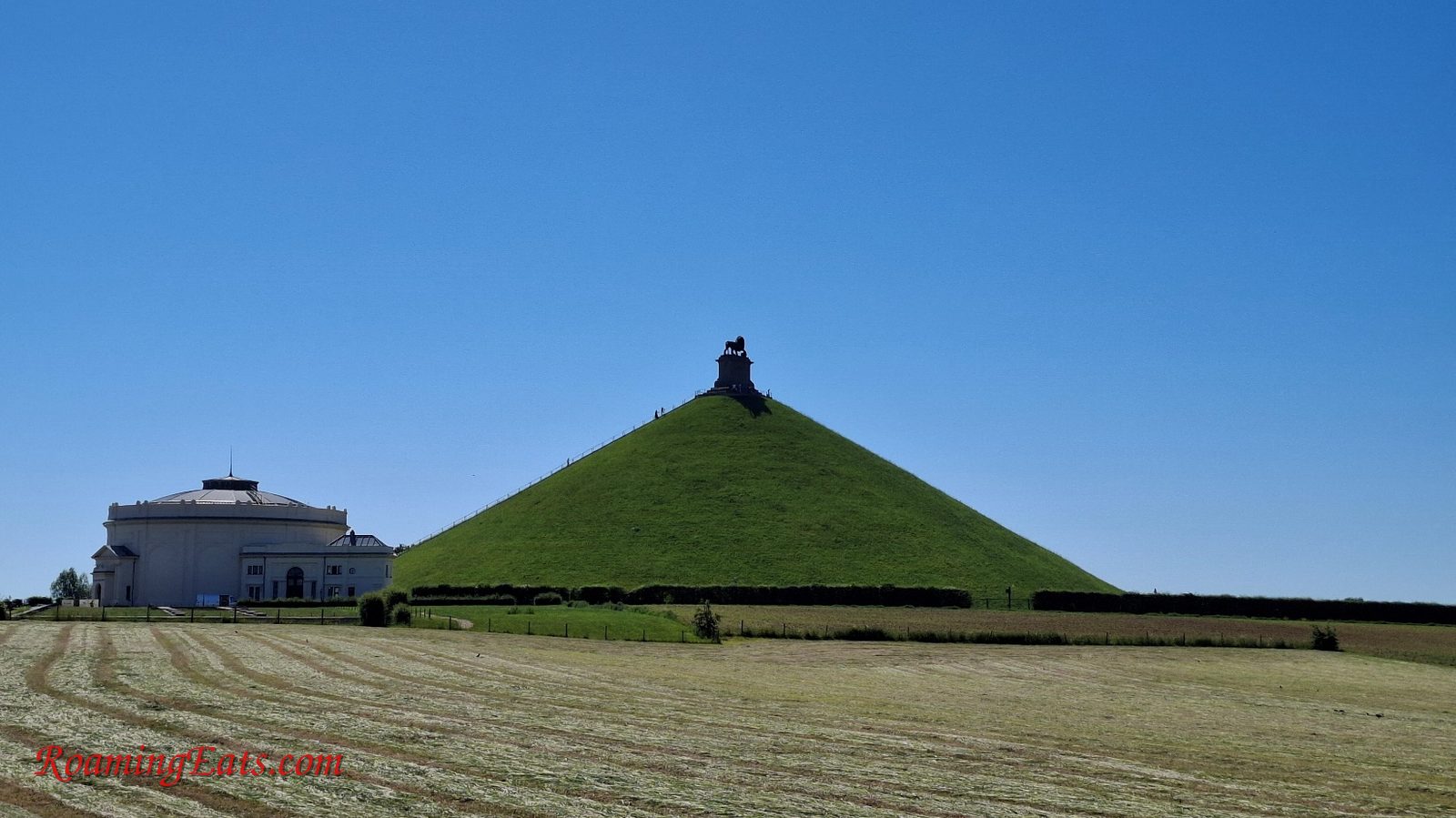
The first thing you see is impossible to miss: a perfectly shaped grassy hill rising out of otherwise flat farmland, with an enormous lion on top, proudly watching over the battlefield. Photos don’t really convey how massive it is — it almost looks as though someone dropped a giant green pyramid into the middle of a farming district.
It was so peaceful and quiet (and a very hot day). Standing in the middle of green farmland under a bright blue sky, it was hard to imagine that more than 190,000 soldiers once fought on these very fields, screaming and firing muskets.
Start at the Visitor Centre — the Memorial 1815 Museum
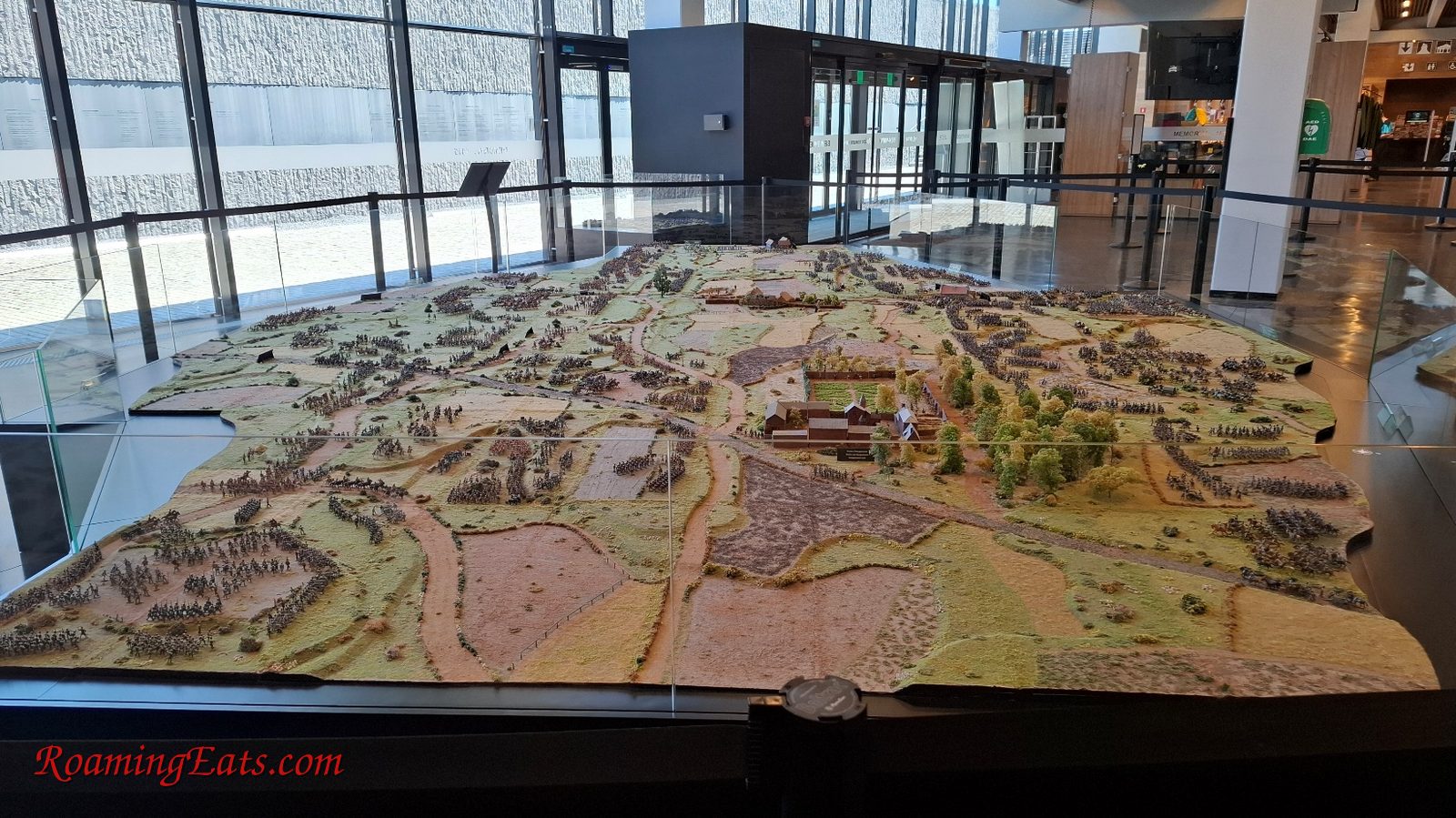
This is the visitor centre and also the museum. You buy your tickets here, and there are free guided tours you can join depending on the timing. We had to wait an hour for the next tour; given how hot it was and that it was almost lunchtime, we were happy to camp in the cool and eat our wraps while we waited. Toilets and free lockers (a coin is needed, but you get it back) are also available, which is very handy.
There’s a huge map explaining where everything is located, which turned out to be far more useful than I expected. Tip: study this map before heading out. The battlefield covers quite a large area, and this detailed map helps you understand where Wellington, Napoleon and Hougoumont Farm were located — it all makes much more sense once you step onto the field.
The Guided Tour
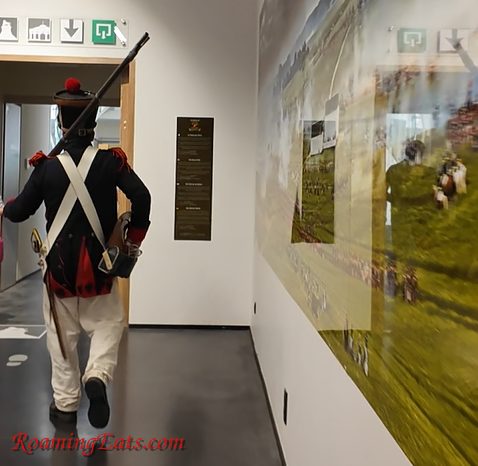
Our guide turned out to be a young fella dressed in French military uniform, which I thought was very entertaining and fitting for the tour — though I did feel terribly sorry for him having to wear it on such a hot day! Our first stop was the Panorama.
The Panorama
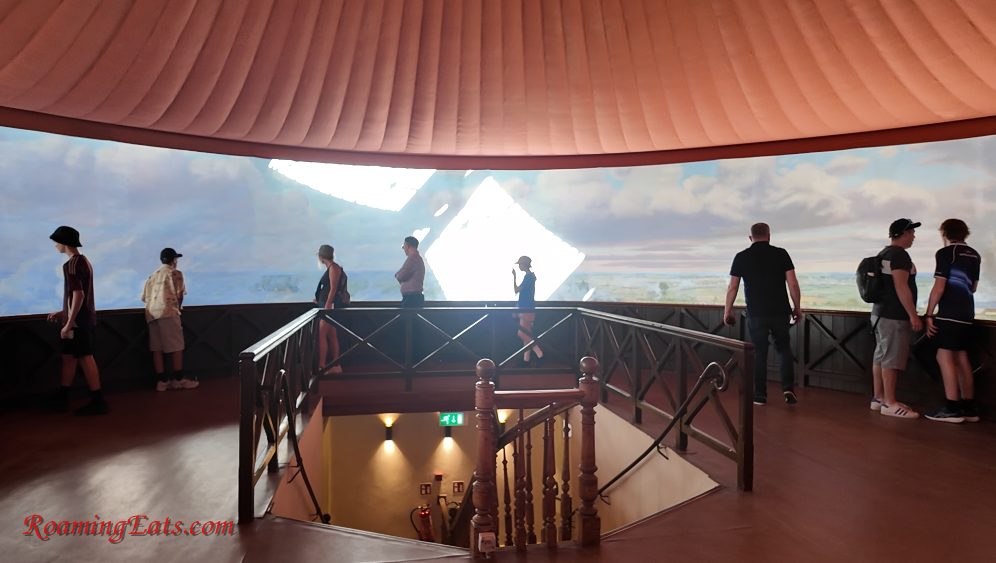
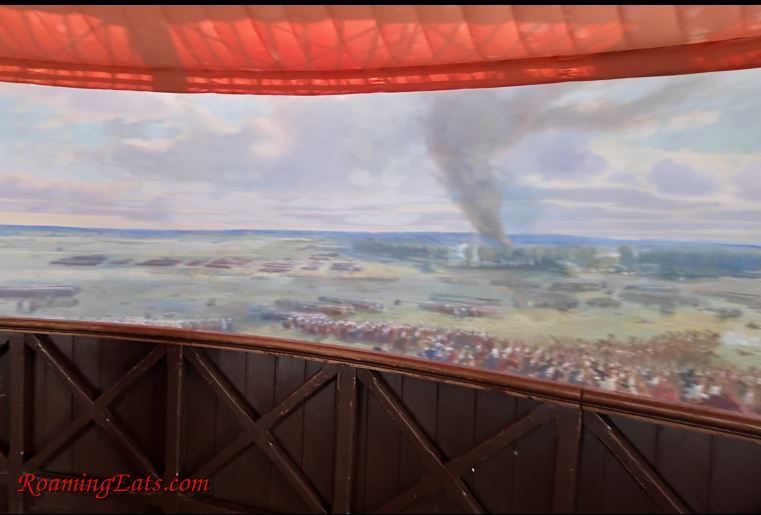
This is an incredible 360-degree canvas painting by a French painter, measuring 110 metres long. The enormous circular painting wraps completely around you, while sound effects recreate the battle with cannons booming and smoke rising, and thousands of soldiers appear to charge across the landscape.
It’s over a hundred years old, but it still does an incredible job of transporting you back to 1815. I thought it would be just some painting, but when you pay attention, the detail is so fine and the story the painter wants to convey deserves far more than a five-minute glance. Do a full loop and try to picture what happened on the day — I only wish there were more storyboards to help you understand each scene. Definitely don’t rush through this part.
Lion’s Mound (Butte du Lion)
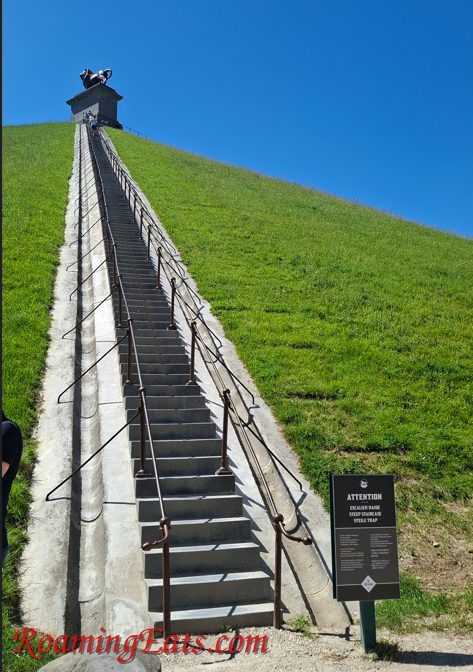
Next stop, the Lion’s Mound. Our guide took us out into the heat and we stood at the base of the famous staircase to listen to his narrative. 226 stone steps — you have to do the climb to be rewarded at the top.
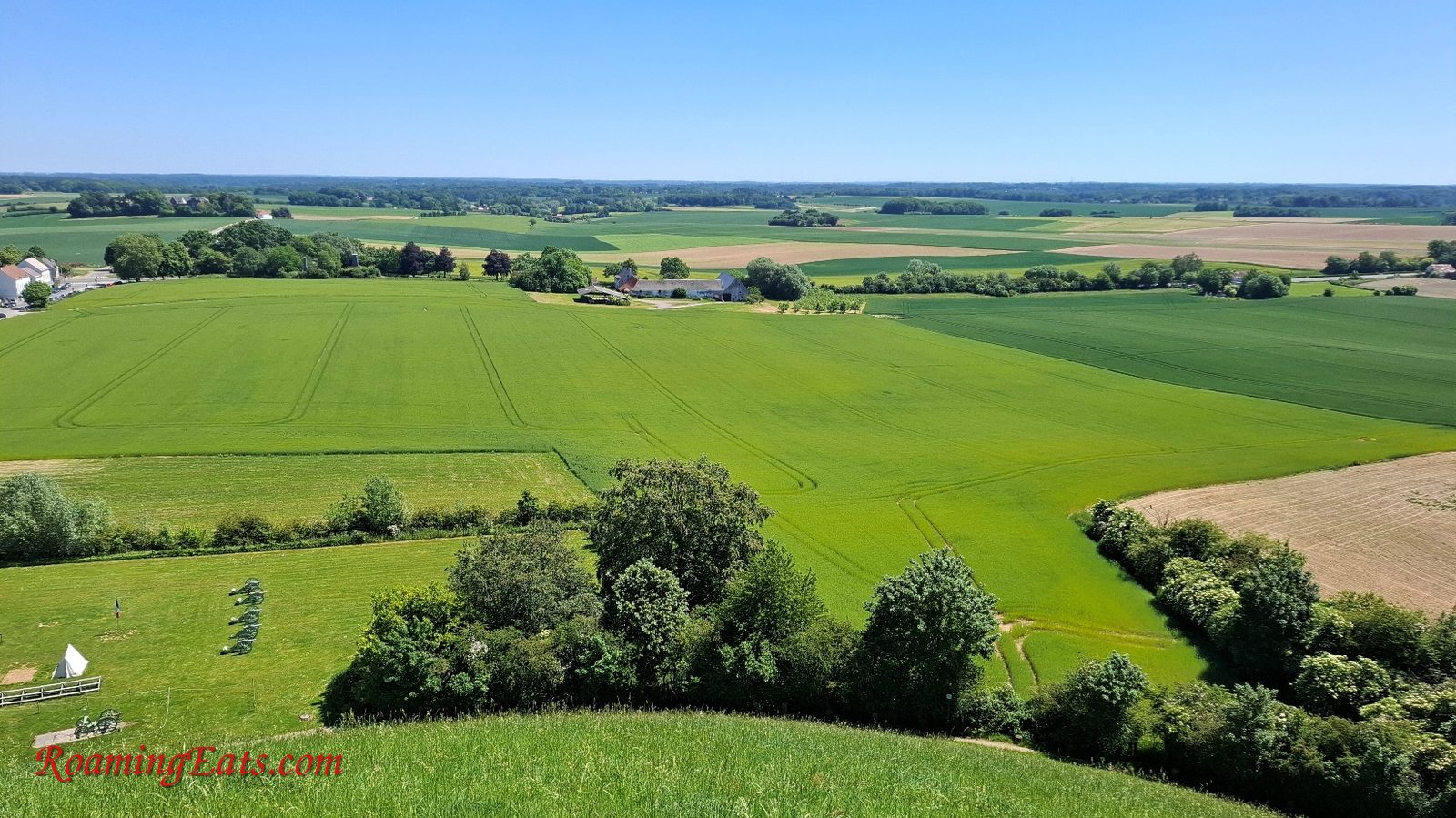
The view at the top is stunning on such a clear, blue-sky day. The 360-degree panorama stretches across the entire battlefield, which is peaceful farmland today. Standing next to the 28-tonne lion, you can see exactly where Wellington hid his troops behind the ridgeline. It’s very difficult to imagine the bloody chaos that took place right here 211 years ago, on 18 June 1815.
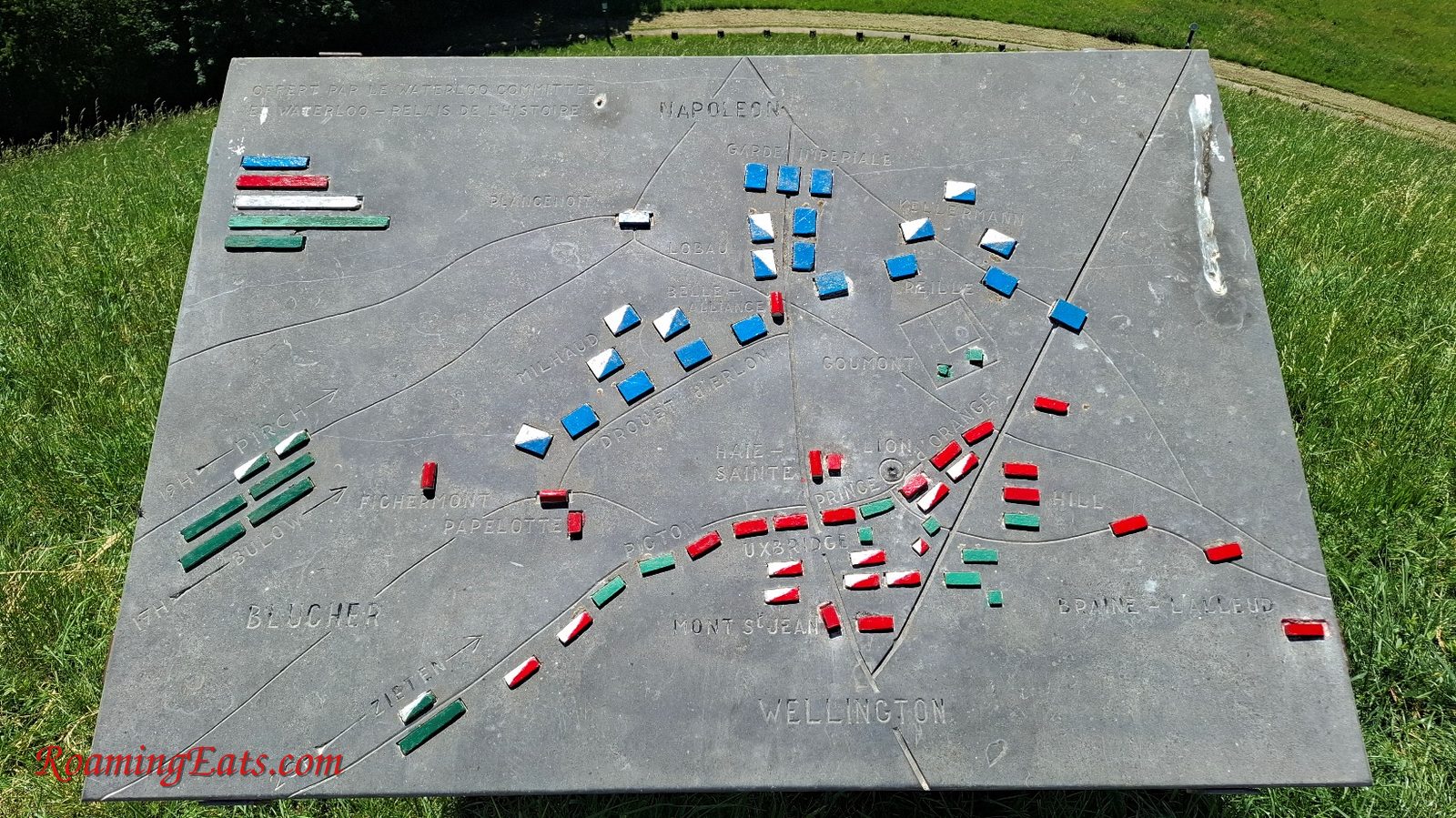
The metal plaque above shows where Napoleon, Wellington and the allied troops were stationed for the attack — a troop-deployment map located right at the spot, as it was in June 1815. The coloured blocks indicate the troop positions (French in blue, British and Allies in red, Prussians in green), giving you a literal layout of the battlefield from your vantage point.
The tour concluded here. While our guide marched back to the visitor centre to rest, everyone else was free to hang around the Lion’s Mound or head to the next site, Hougoumont Farm.
Hougoumont Farm
Entry to the farm is included in the ticket price, but you’ll need to make your own way there — either a 20-minute walk, or a short drive if you came by car. A bit further out, this fortified farmhouse was fiercely contested during the battle. You might wonder why Wellington and Napoleon were both so obsessed with a farm; the answer is that, although it was a farm, it was structurally solid and sat in a low valley right in front of Wellington’s right ridgeline, so it acted like a natural shield. It was considered so crucial that Wellington believed his defensive line would fall if the French took it.
Today it features an excellent light-and-sound show that projects historical re-enactments onto the surviving brick walls.
Unfortunately the heat was becoming unbearable, so we decided to give Hougoumont Farm a miss and hop across the road to the pub to quench our thirst with some local brew (more on that later)!
The Memorial 1815 Museum
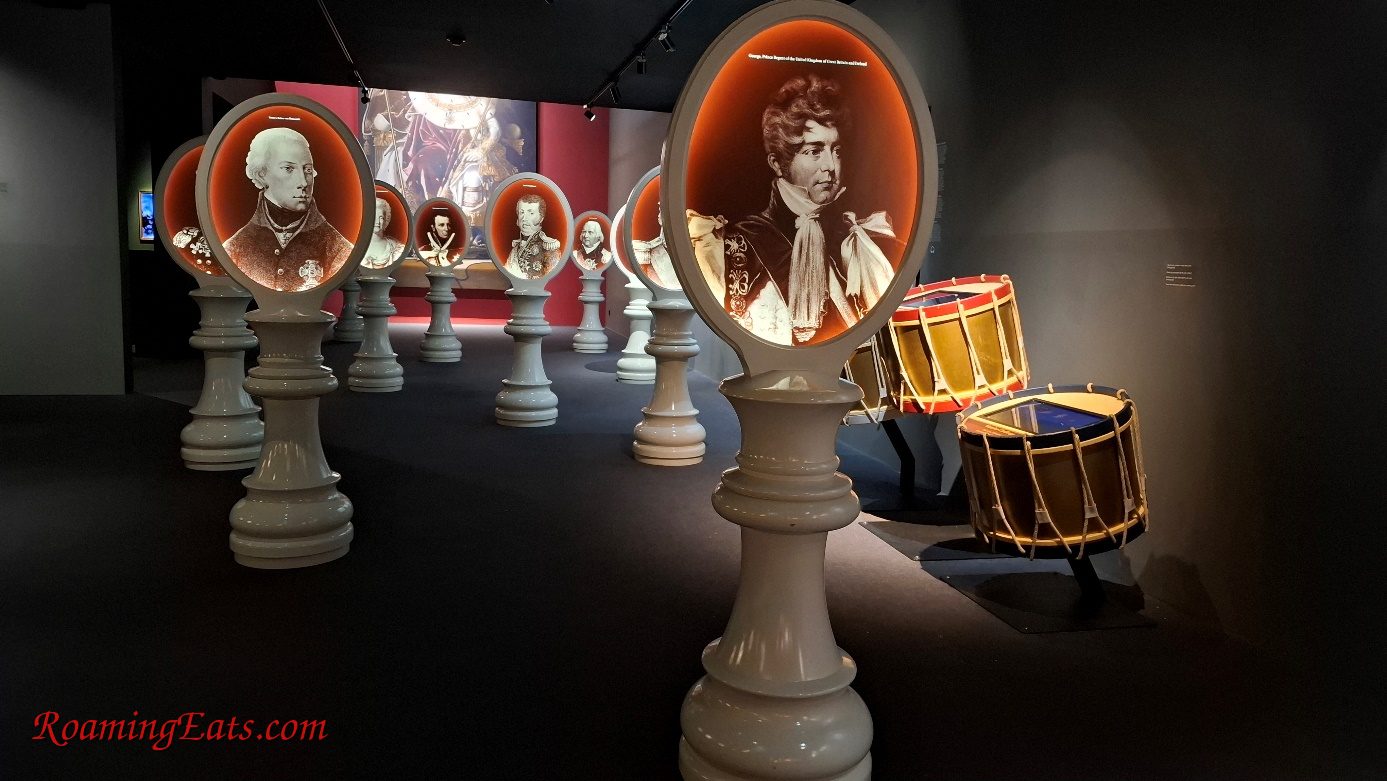
After a nice cool (yes, not cold) beer and a rest for our legs, we headed back to the museum to finish the indoor part of the tour — except this part is self-guided, using an audio guide on your smartphone. It’s a very interactive museum, showcasing the timeline from the rise of the French Empire through the French Revolution and the rise of Napoleon, and the events leading up to the war. It also displays military equipment and weapons, and lifelike mannequins dressed in authentic period uniforms on the French, British and Prussian sides.
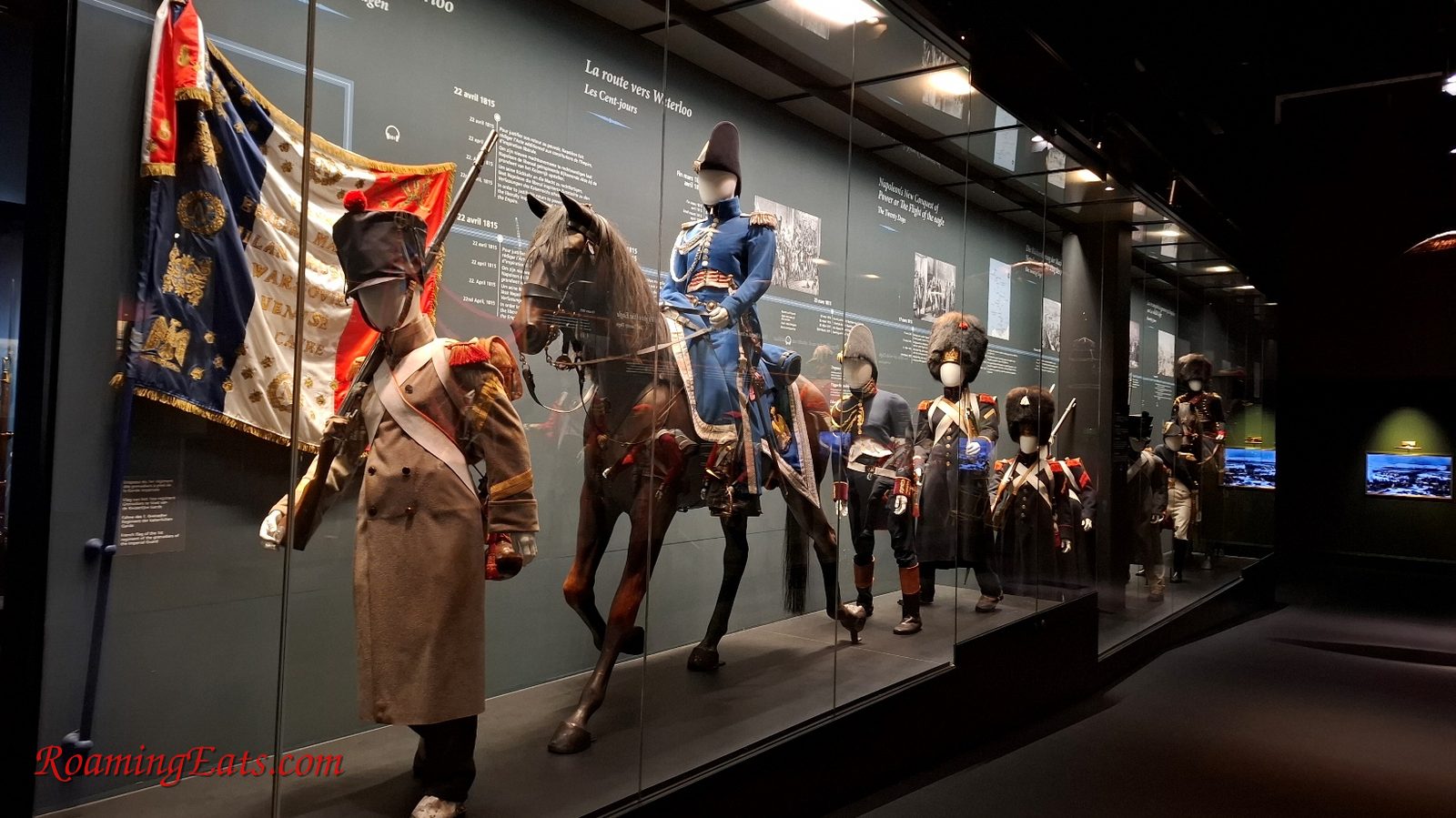
The museum tour wraps up with a 15-minute 4D film depicting the bloodshed of 18 June 1815. There’s a gift shop near the ticketing counter (and toilets), where you can pick up something to remember your visit. How could we resist, after being so overwhelmed by this extraordinary place in our history?
Le Bivouac de l’Empereur
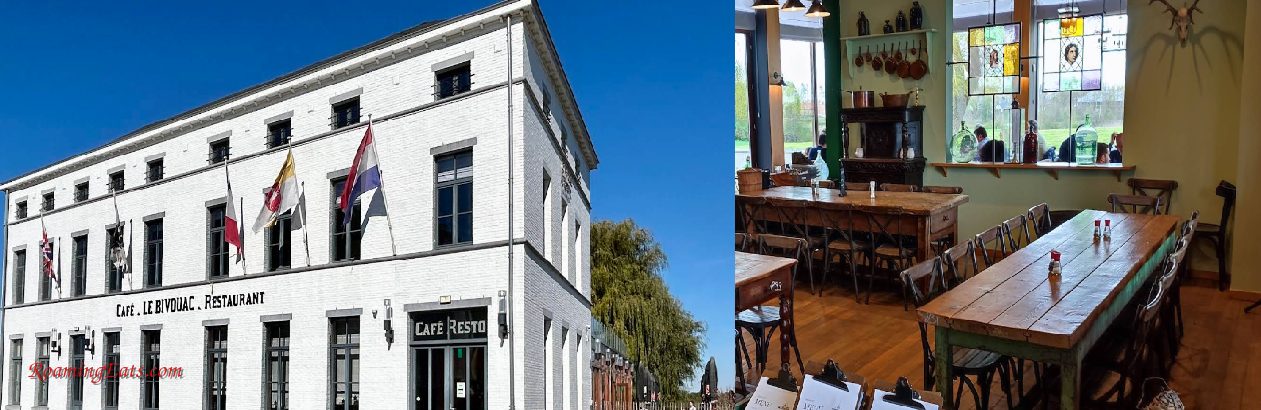
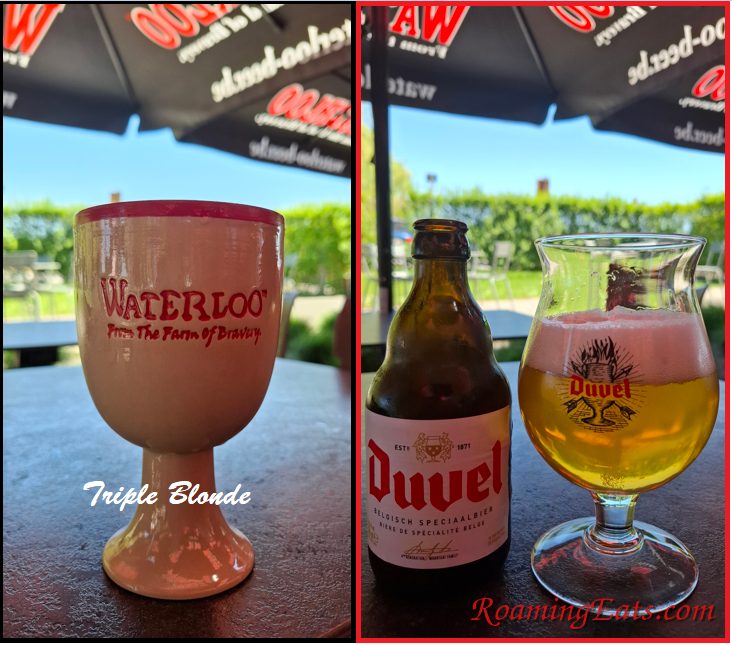
A very elegant restaurant with outdoor seating across the road from the Lion’s Mound. The Waterloo beer (8.0% ABV), also known as the “Beer of Bravery”, is brewed right on the historic battlefield grounds at La Ferme de Mont-Saint-Jean. I loved the ceramic earthenware chalice the beer is served in — and I couldn’t resist a second one, the Duvel 6.66.
Practical Information
To help you plan, here’s a quick overview of what to expect in terms of timing and logistics.
| Location | Route du Lion 1815, 1420 Braine-l’Alleud, Belgium |
| Entry fee | €25.50 low season · €29 high season (adult standard ticket covering the Museum, Panorama, Lion’s Mound and Hougoumont Farm). Low season: November to March. High season: April to the end of October, plus school holidays, public holidays and weekends. |
| Opening hours | 10:00 am – 6:30 pm daily (most of the year); 9:30 am – 7:00 pm daily (July & August) |
| Duration | 3.5 to 4 hours for a comfortable pace across the main estate — longer if you also explore Hougoumont Farm and the surrounding battlefield. As a guide: Visitor Centre ~10 minutes, Memorial Museum 1.5–2 hours, Panorama ~20 minutes, Lion’s Mound 30–45 minutes. |
Final Thoughts
Before visiting, I thought Waterloo would simply be another item to tick off the Belgium itinerary. Instead, it became one of my favourite day trips from Brussels, because the entire site is presented so well. The museum brings the history to life without feeling overwhelming, the battlefield has remained remarkably untouched, the Panorama painting is beautifully detailed, and standing on top of the Lion’s Mound really makes you appreciate how enormous this battle was — and all the sacrifices made.
If you’re travelling through Belgium and have even the slightest interest in history, Waterloo is well worth the trip. Just remember one thing: try to pick a day that isn’t too hot, if you can!