
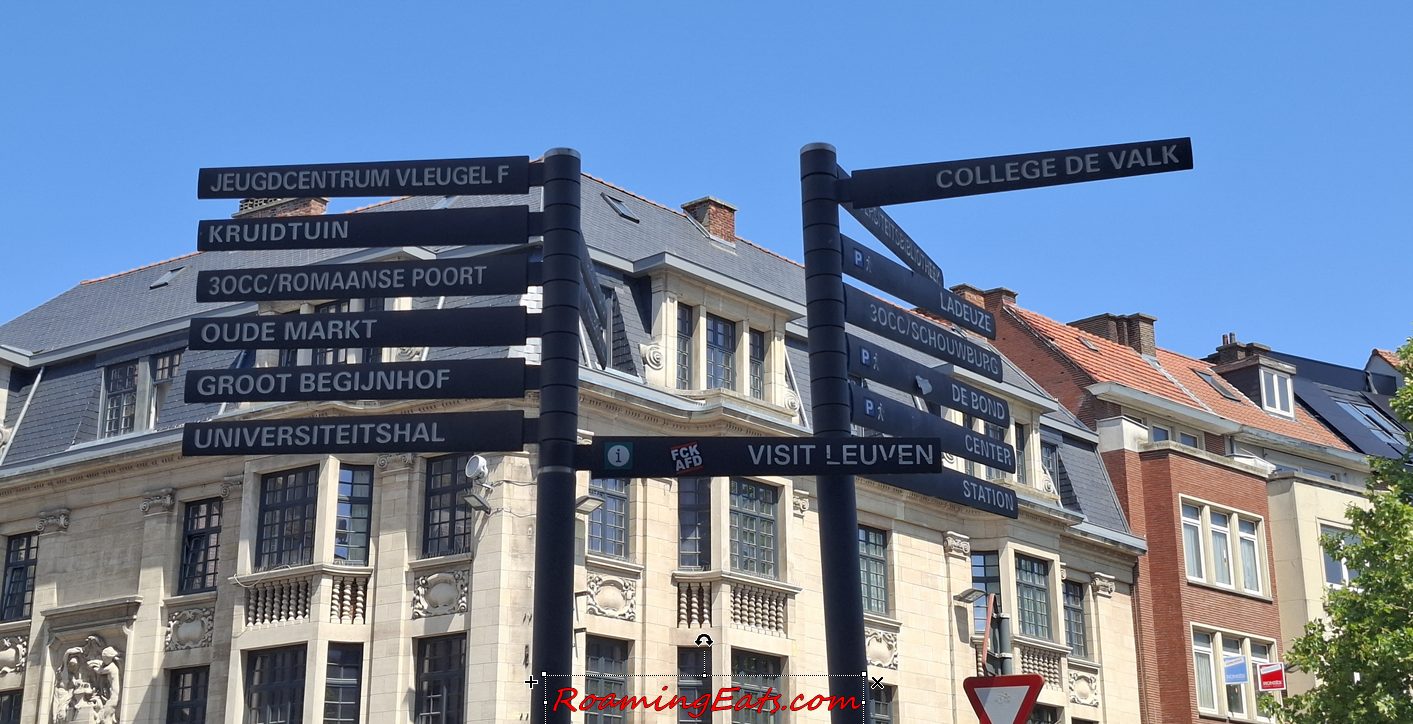
Leuven is a vibrant Belgian city that effortlessly pairs breathtaking Gothic architecture with a lively, youthful energy. It’s world-famous for three things: one of Europe’s oldest universities, KU Leuven; beer — particularly the Stella Artois brewery, whose beer has been brewed here since 1926; and the Oude Markt (dubbed the “world’s longest bar”). Best of all, because it sits just a direct 25-minute train ride from Brussels Central, you can easily cover its historic core, university libraries and city centre entirely on foot in a single, relaxed day trip.
Getting There: The Train from Brussels
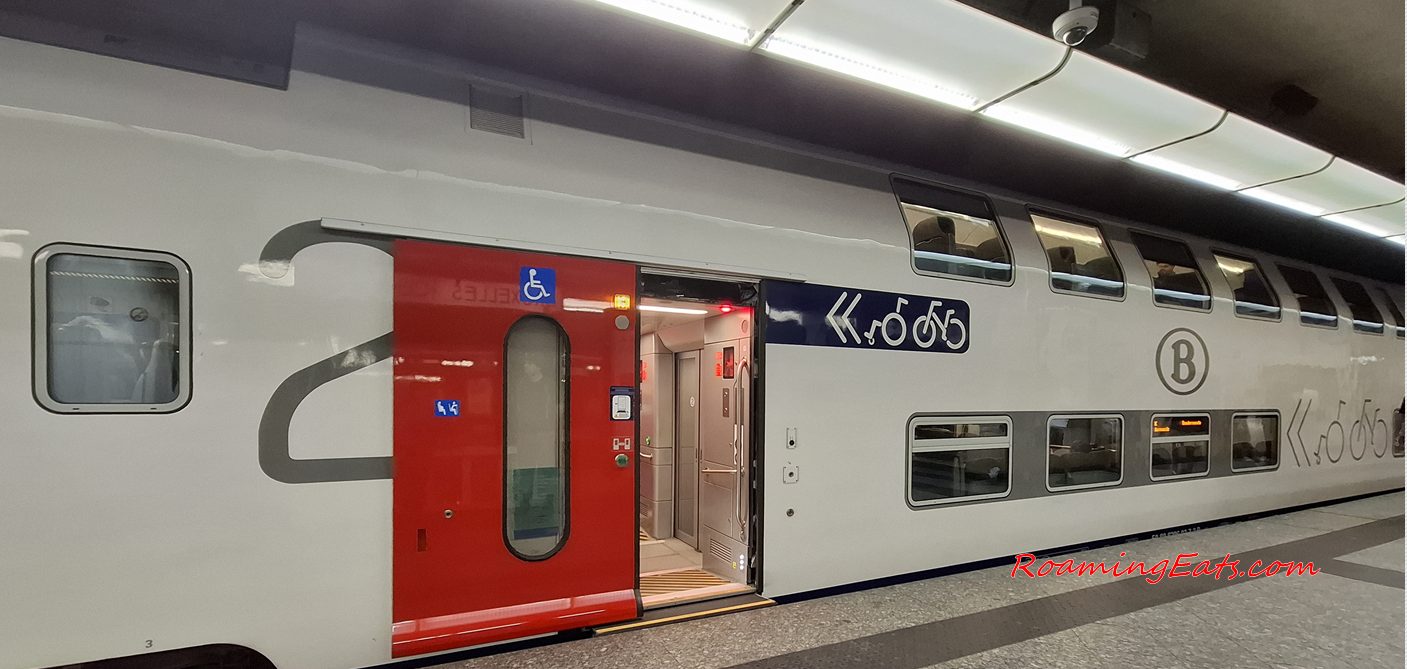
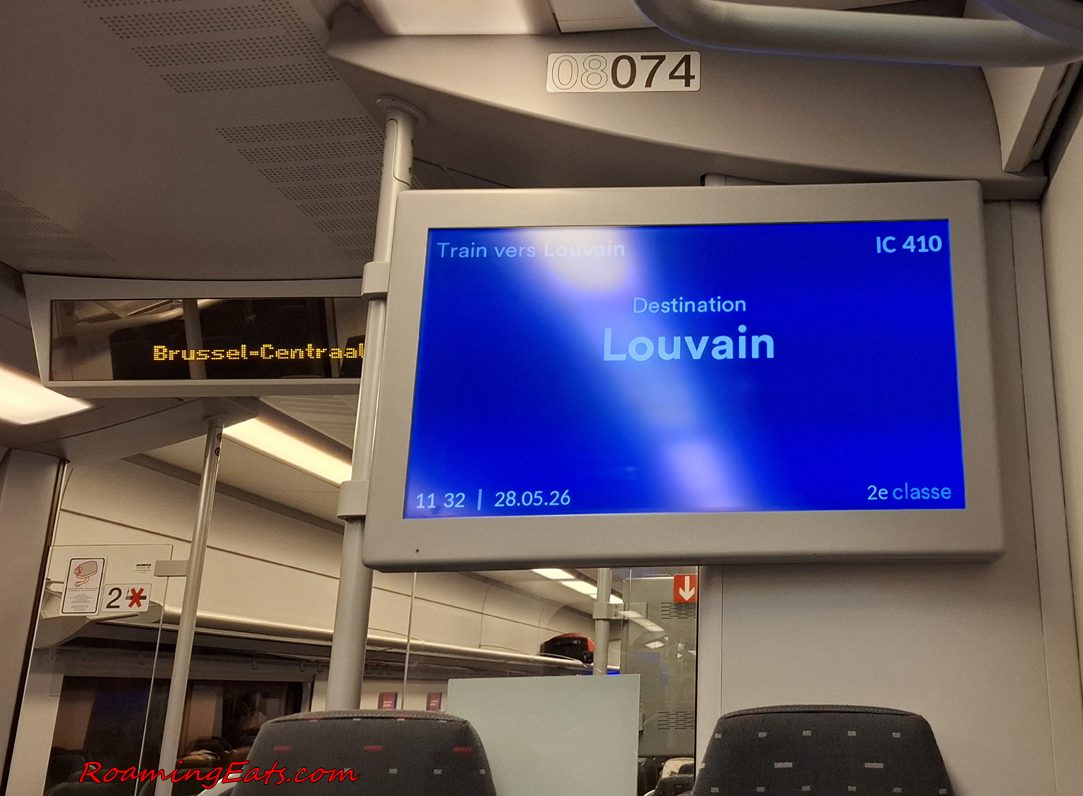
| Route | Brussels Central to Leuven Station (check the current timetable on the official SNCB Belgian Railways website) |
| Duration | 22 to 29 minutes each way |
| Frequency | Frequent — roughly three direct InterCity (IC) trains an hour on weekends, with a dense weekday schedule too |
| Cost | Around €5.00–€11.00 for a 2nd-class adult fare; standard one-way fares generally sit around €6.00–€7.00, depending on distance and fare type |
| Price notes | Fares depend on the day and time: weekend trips trigger automatic discounts, while weekday commuter hours hit the higher end. Locals also have a monthly discount they can apply. |
| Tickets | Ticket machines at Brussels Central are the easiest option for tourists and fully accept credit cards. A mobile app exists, but its setup is better suited to locals. |
From Station to Grote Markt
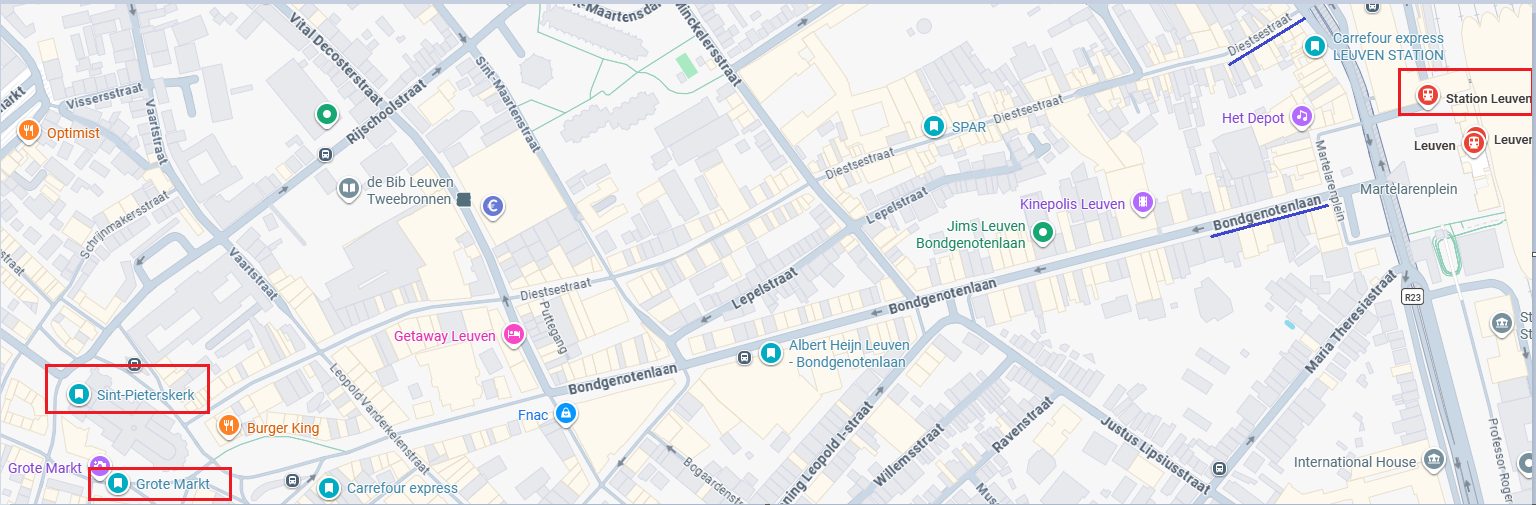
Getting from Leuven Station to the Grote Markt is straightforward — it’s a direct walk down the main street. After exiting the station, walk straight down Bondgenotenlaan for about 16 minutes until the shopping street opens up into the central square. If you’d prefer a pedestrian-only route with no traffic, walk down Diestsestraat, which runs completely parallel to the main road.
First Stop: Stop the Rumbling Tummy
We had to get lunch first, and there are far too many choices on Tiensestraat. Since we’d seen this place in Brussels but never around meal times, we decided to have lunch at Manhattn’s Burgers.
Self-Guided Walking Tour
We bought an audio guide from VoiceMap, which is rather easy to use. You download the app, then download the audio guide while you have free Wi-Fi, and play it when you’re ready to go. We shared the earbuds between us, so only one smartphone is needed to play the guide. If there are more than two of you, you’ll need to consider buying more than one audio guide — unless your phone can pair with more than one set of Bluetooth earbuds at once.
Our self-guided walking tour is 2 km and takes around 90 minutes to complete. It covers the following key landmarks (I haven’t given away every location — more on that later):
- Start: Grote Markt
- Stops: Historic Leuven Town Hall (Stadhuis), Saint Peter’s Church (Sint-Pieterskerk), Oude Markt, Ladeuzeplein
- End: Fonske statue (Fons Sapientiae fountain)
Saint Peter’s Church
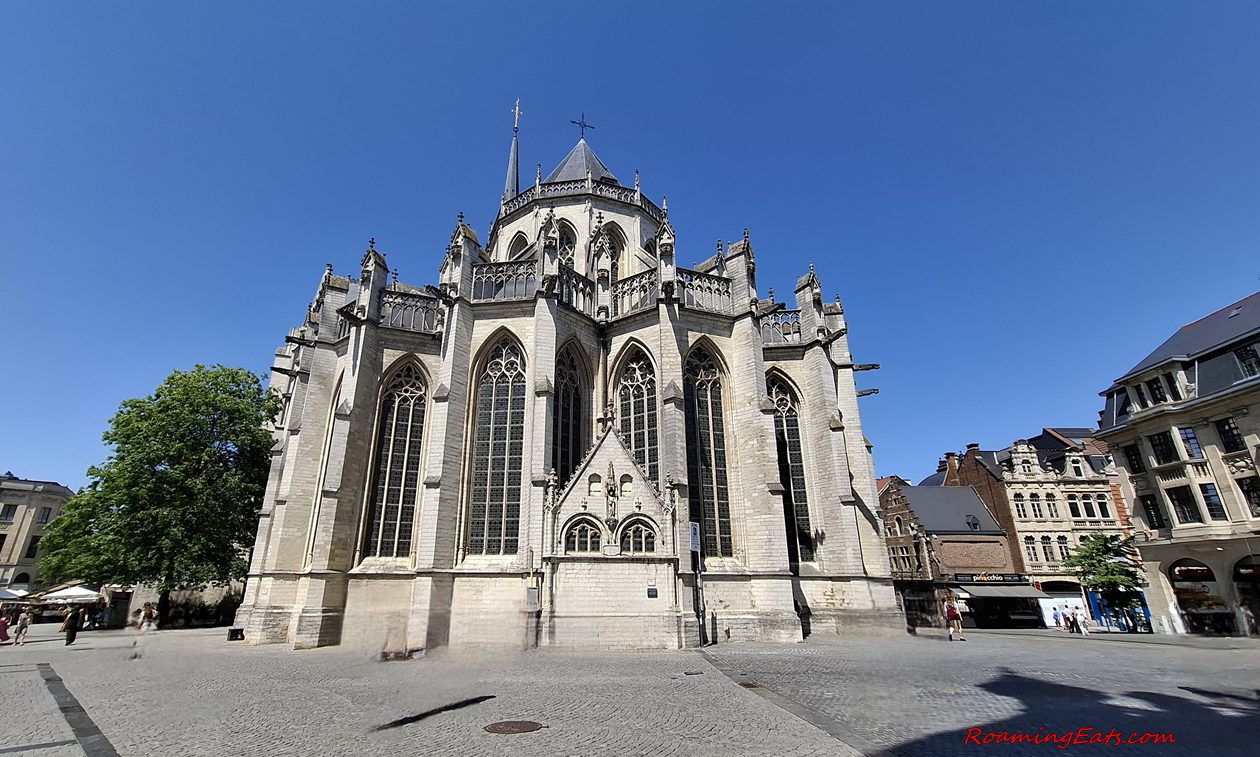
| Location | Grote Markt 1, 3000 Leuven |
| Opening hours | Mon–Tue & Thu–Sat: 10:00 am – 4:30 pm; Wednesday: closed; Sunday & holidays: 11:00 am – 4:30 pm. Hours can change for religious services or special events, so check before visiting. |
| Fees | Free admission to the main church building |
| Duration | 30 minutes |
| Website | visitleuven.be |
This massive, hard-to-miss church dates from the 15th century and is a fine example of Brabant Gothic architecture. It’s also part of Leuven’s UNESCO-listed heritage.
One particularly interesting detail is that the church’s towers were never completed. The unstable ground made the original plans far more difficult than expected, leaving Leuven with a church that looks spectacular but slightly unfinished at the top. Inside you’ll find a collection of Flemish artworks, including Dieric Bouts’ masterpiece, The Last Supper.
Tip: if your Leuven day trip happens to fall on a Friday, there’s an added little treat. The carillon of Saint Peter’s Church is played live by a carillonneur at 12:00 pm every Friday, with the free concert taking place in the Grote Markt.
Historic Leuven Town Hall (Stadhuis)
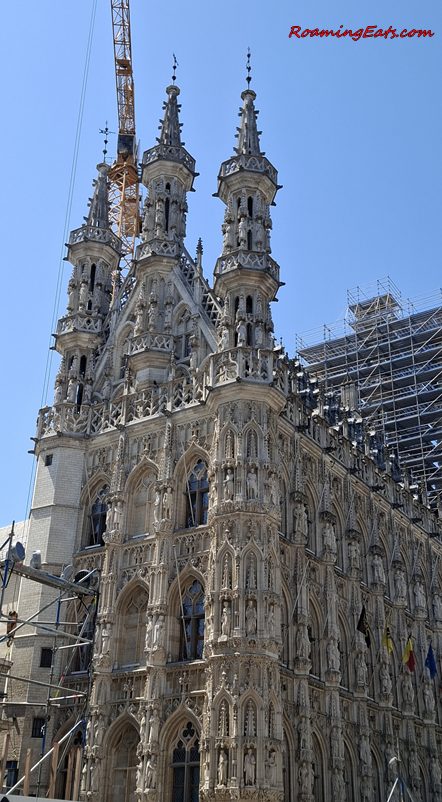
Directly across from the church sits the historic Leuven Town Hall. Built between 1448 and 1469, it’s one of the most famous Late Gothic municipal buildings in the world, with an incredibly intricate, lace-like stone facade. The exterior is decorated with three tiers of 236 detailed statues — representing local historical figures, scholars and biblical characters — that were added in the 19th century.
Renovation note: when we visited in May 2026, the building was closed for an interior restoration project forecast for completion in 2029. While you can’t go inside right now, admiring and photographing the staggering detail of the exterior remains a highlight of the Grote Markt. As you can see in the photo, there are cranes and scaffolding in place.
Old Market Square (Oude Markt)
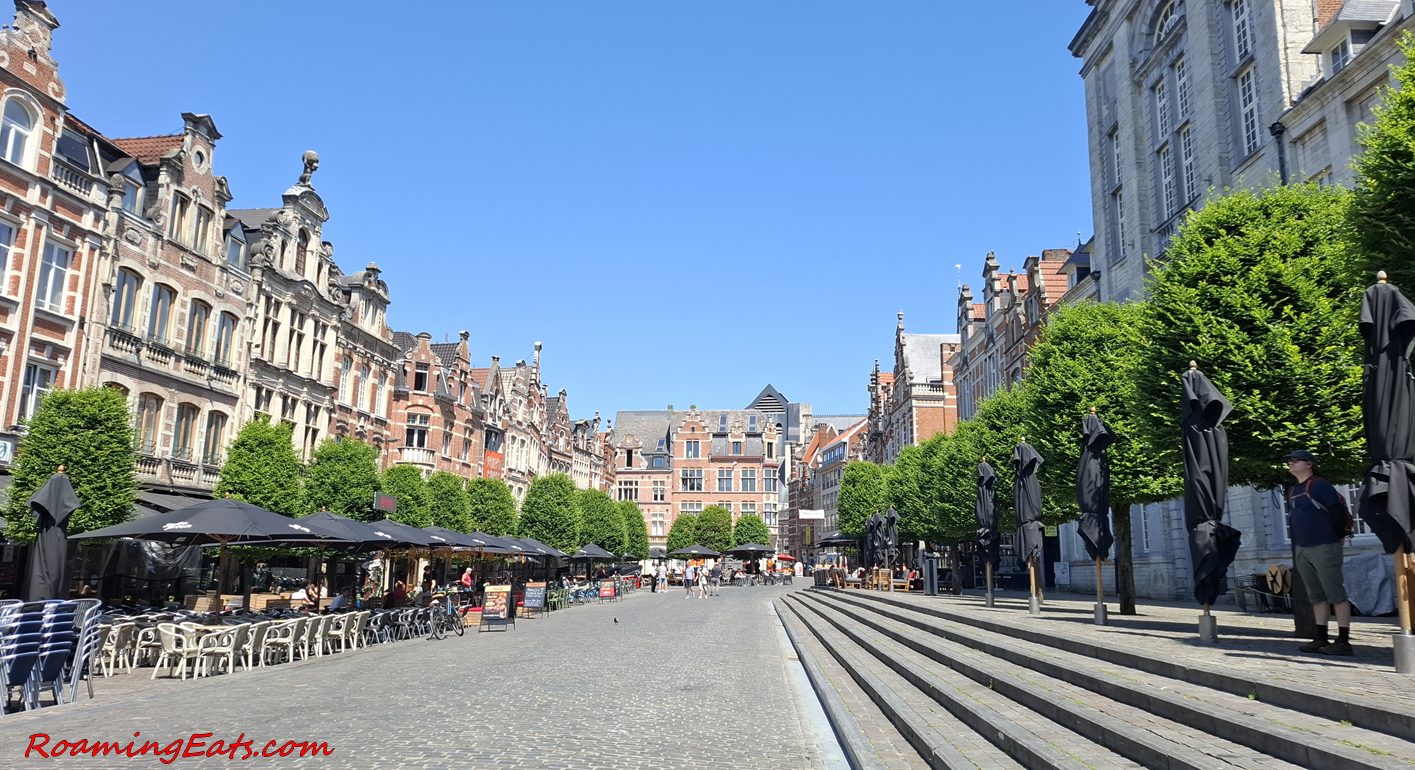
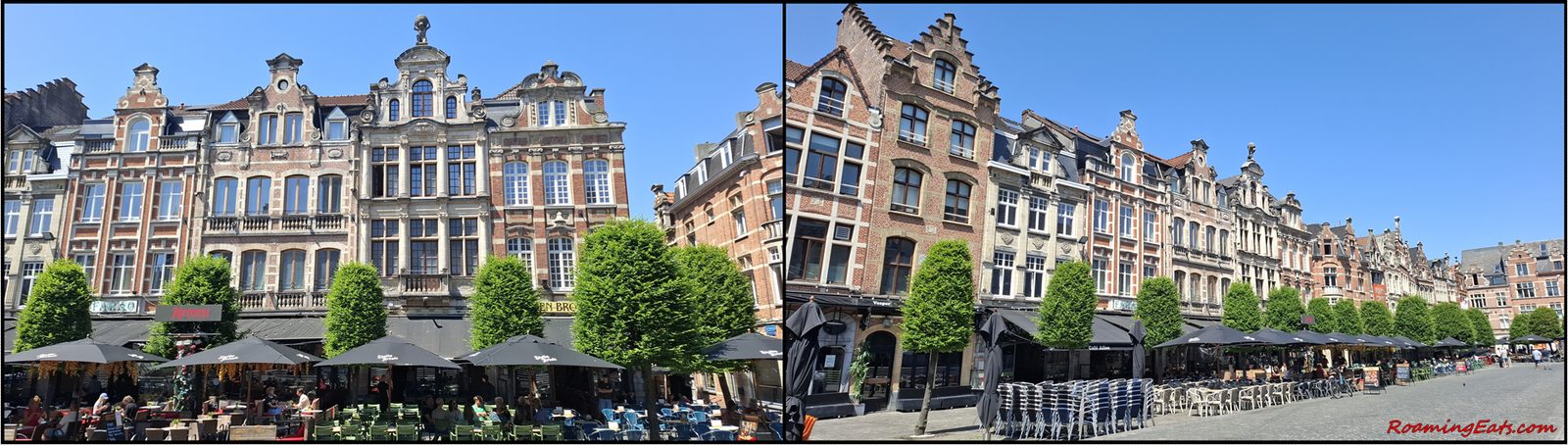
The next stop is a short walk from the Grote Markt to the Oude Markt, a vibrant cobblestone square. It originally served as the city’s main marketplace in the 12th century, but had to be completely rebuilt in traditional Flemish style after being destroyed during both World Wars. It’s famously called the “longest bar in Europe” because the entire rectangular square is lined side by side with over 30 individual bars, pubs and restaurants sharing one massive outdoor seating area.
It’s the primary social hub for local residents and university students to grab a regional Belgian beer or a coffee and relax outdoors.
We were there just after lunchtime, so there wasn’t much of a crowd yet — the terraces were still quiet and mostly empty, and some restaurants still had their tables and chairs stacked up. The square becomes energetic and lively from dinner time, when students and locals gather for evening drinks. The large classic grey stone building on the right of the photo above is the historic University Hall (Universiteitshal), which serves as the administrative headquarters for KU Leuven.
Special Mention: Domus Huisbrouwerij
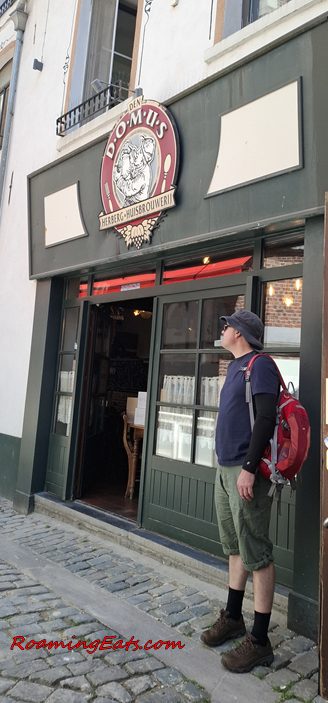
We walked past this brewery during the self-guided tour, and it deserves a special mention because it’s the very first traditional microbrewery of its kind in the entire Benelux region.
It’s a “home” brewery, where the beer is made directly across the street and pumped underground through a copper pipeline running straight into the bar taps. Leuven once had 50 independent breweries; today only two remain active in the whole city — the well-known Stella Artois factory and this tiny, independent brewpub.
KU Leuven University Library & Ladeuzeplein
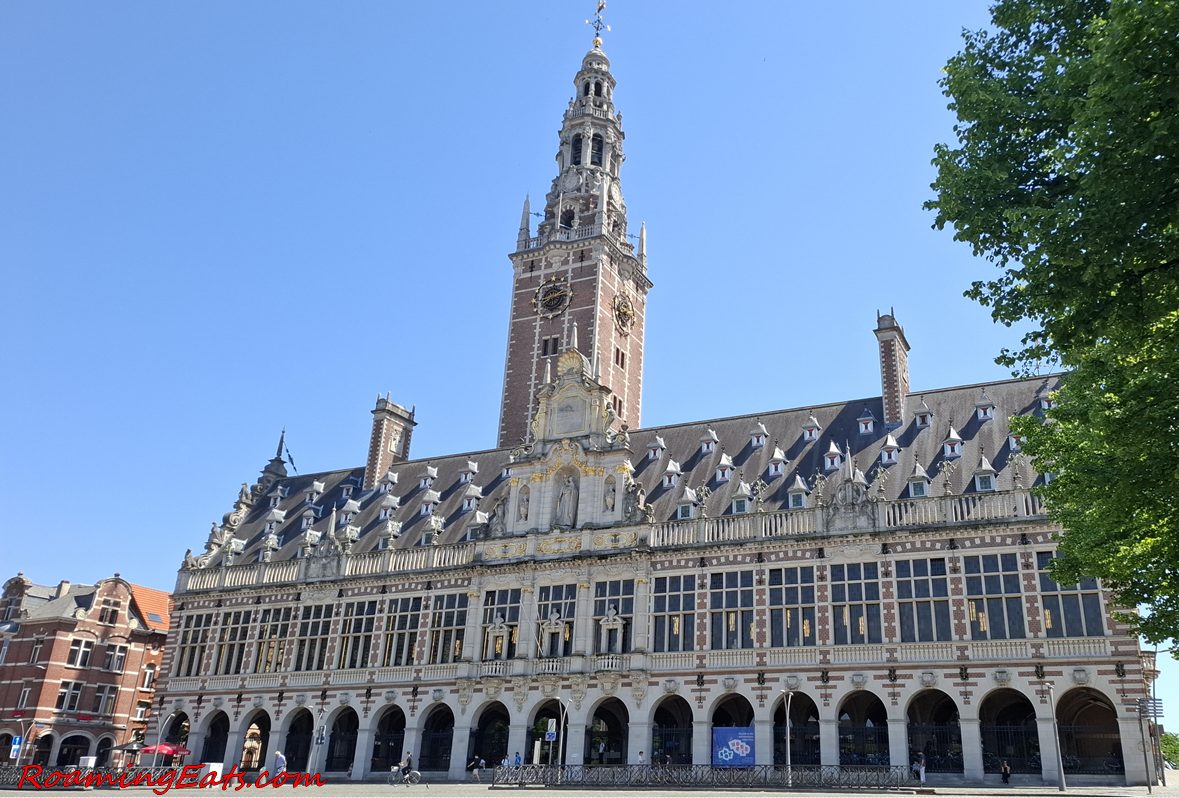
The next stop is the monumental KU Leuven University Library, which dominates the massive Ladeuzeplein square. Built in a grand Flemish Neo-Renaissance style, this iconic building has a heavy history: it was completely burned down and destroyed during both World War I and World War II, so the structure you see today is a resilient post-war reconstruction funded largely by American donations.
The library is an active study space used by students and researchers, but the public exhibition area and tower are separate from the study hall, so visitors don’t disturb anyone.
A heads-up if you’re visiting during the week: entry isn’t free, and a standard ticket only grants access to the hallways and outdoor corridors. Because students and researchers are actively working during the week, tourists are blocked from stepping inside the grand, wood-panelled Great Reading Room — which is a shame, because it genuinely looks like a magical hall straight out of a Harry Potter film. If you want to walk among the historic bookshelves, plan your day trip on a weekend, when the reading room fully opens to the public.
| Opening hours | Mon–Fri: 9:00 am – 6:00 pm; Sat & Sun: 10:00 am – 6:00 pm |
| Fees | Viewing the square and sculpture is free. Hallway access on weekdays (audio tour included): €5.00. Library and tower on weekends: €10.00 standard adult (students get a discount). Guided tower tour Sat (Dutch) & Sun (English): €5.00. See the admission prices. |
| Duration | 20 minutes for the square and sculpture; about 1 hour if you climb the interior tower |
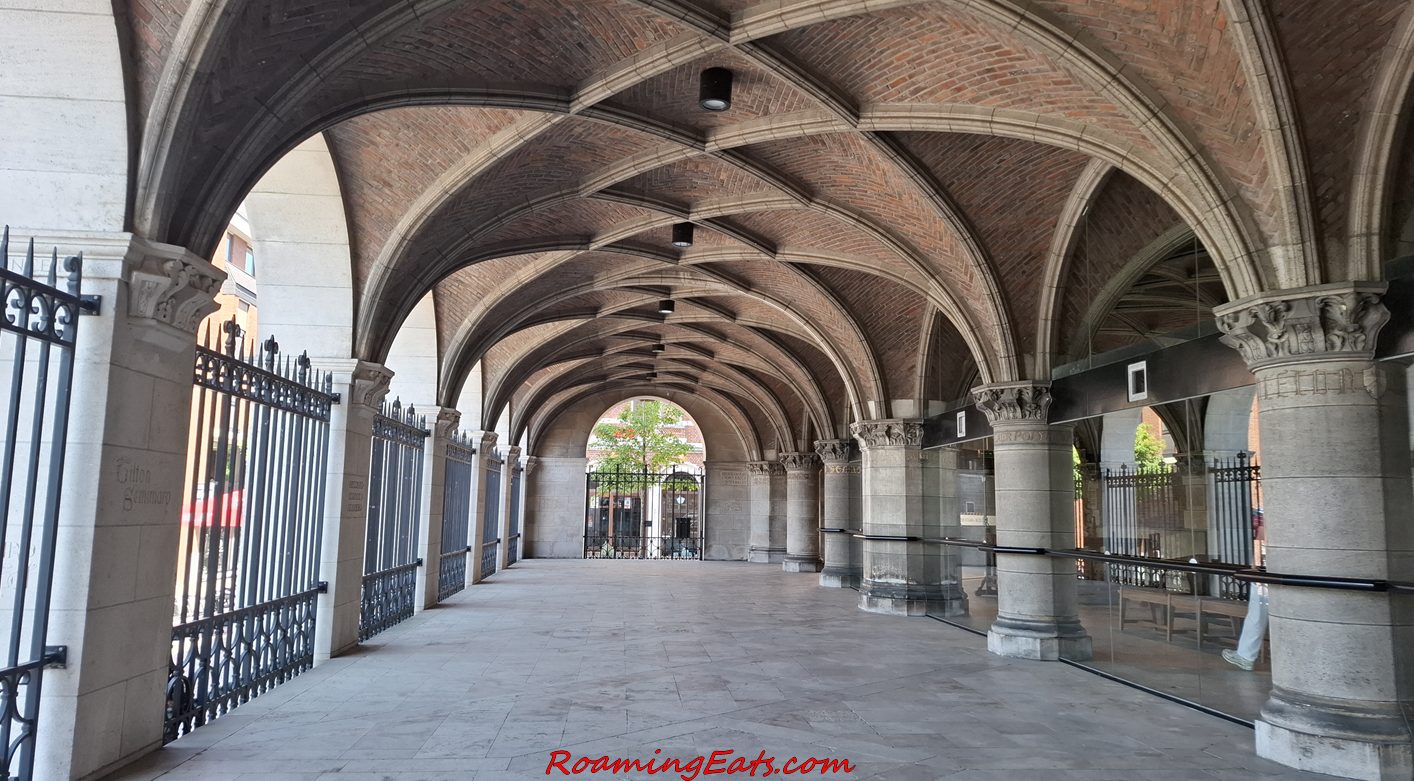
As you step into the library entrance, you’ll see an amazing ceiling that uses a classic brick groin-vault system — raw, exposed red bricks laid out in an alternating herringbone pattern, framed by intersecting limestone ribs that direct the structural weight outward while highlighting the corridor’s geometric design. The photo doesn’t capture the majestic effect; you have to be there to witness it.
Bug on a Skewer
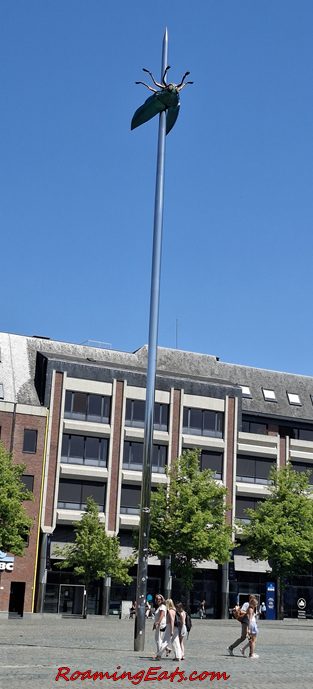
If you’re standing in front of the library, or anywhere in the square, and you spot an art installation that looks like an upside-down bug on a metal pole, your eyes aren’t playing tricks on you.
Right out front, in the middle of the open brick square, sits the hard-to-miss “Bug on a Skewer”. Officially titled Totem, by Belgian artist Jan Fabre, it’s a 23-metre-high (75-foot) stainless steel needle piercing a giant, shimmering green 2.7-metre-wide jewel beetle.
The artist designed it as a gift to commemorate the university’s 575th anniversary, choosing the beetle as a direct metaphor for a library: a vast, precisely catalogued and pinned collection of human knowledge, kept for safekeeping — much like an entomologist carefully pins a specimen into a collection. Very bizarre indeed.
Stella Artois
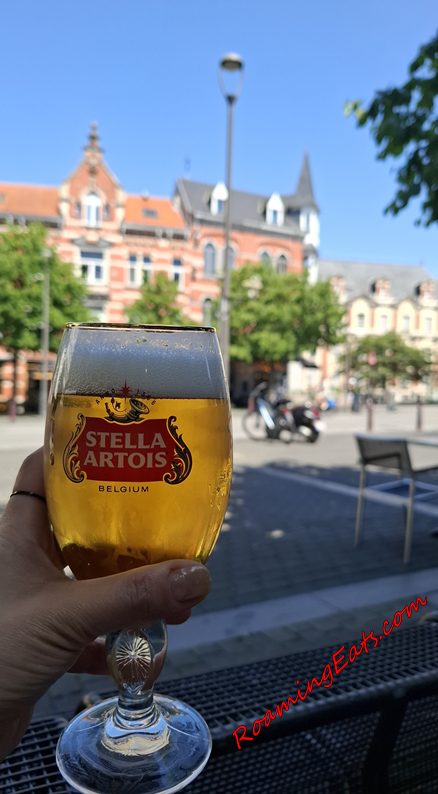
After finishing our self-guided tour, I badly needed to quench my thirst on a very hot day. No trip to Leuven is complete without trying its most famous local export right where it’s brewed. Unfortunately our visit didn’t coincide with any brewery tours at Stella Artois (they require advance online booking), otherwise that would have been a highlight. The world knows about Stella Artois — that’s how well established this brewery has become, growing from a local brewery back in 1366 to what it is today.
Having a cold glass of Stella Artois on an outdoor terrace, watching the cyclists (which is pretty much everyone in Leuven) zoom past, is the perfect way to wrap up the afternoon before heading back to the train station.
Final Thoughts
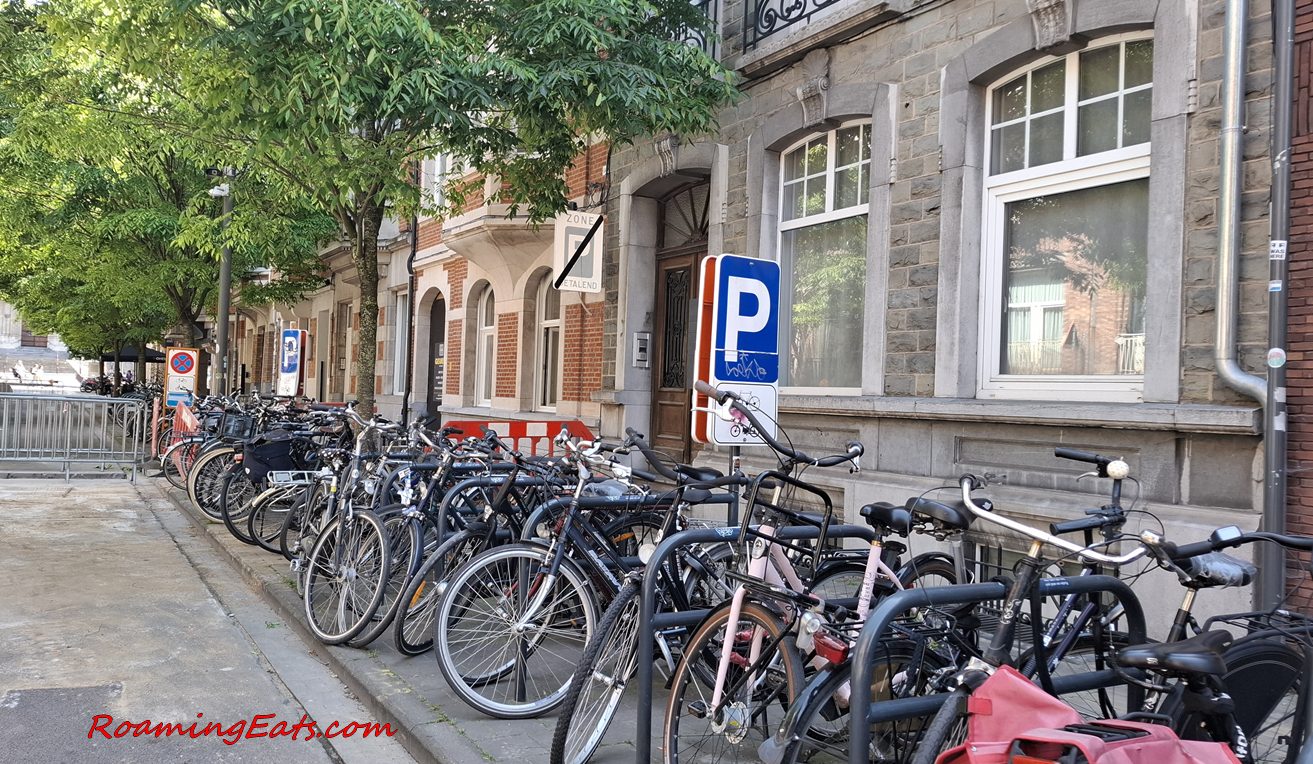
In less than 30 minutes, you can train to Leuven from Brussels, so there’s no need to drive at all. Almost everyone in Leuven cycles — in fact, we probably saw more locals on bikes than on foot. It’s such a harmonious scene: walking among the cyclists, along streets of beautiful Gothic heritage buildings, soaking in the chilled-out vibe of the city. I highly recommend that anyone visiting Brussels allows a day in their itinerary for Leuven. As our experience shows, a self-guided tour only asks about two hours of walking, and you get to see all the city’s key landmarks.
And if you’d like an audio guide too, we highly recommend VoiceMap. There are a few to choose from; the creator of the one we bought is a local Belgian who has put together his own recommendations for enjoying Leuven. I haven’t listed every location from his guide, out of respect for his work and intellectual property.